Lifestyle
The Ripple Effect: How Small Acts of Kindness Create Big Change

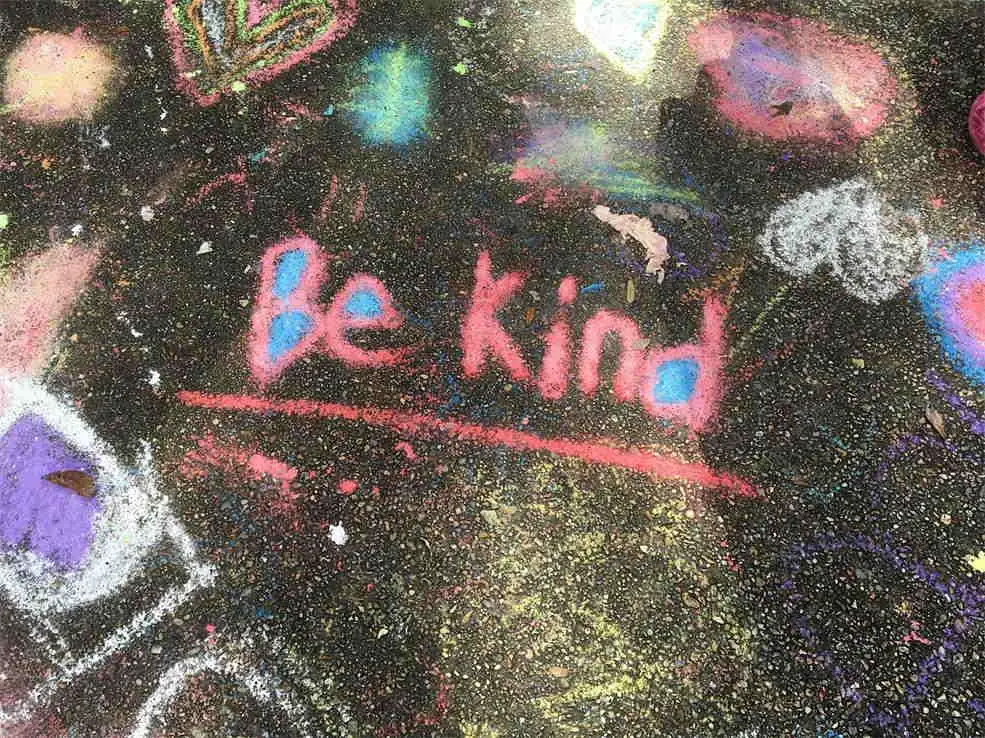
Kindness is contagious – once someone performs an act of kindness for another, it tends to set a chain reaction in motion. For example, you’ve probably heard about people paying for the next car’s order in a drive-thru line, and sometimes, this can go on for 20 cars or more.
There’s just something about being on the receiving end of kindness that makes people want to pass it on to others.
In a world that seems dominated by arguments and self-interest, acts of kindness have the power to transform lives. Not everyone is used to receiving even a basic level of kindness from strangers, and although that’s unfortunate, it means that a small act of kindness can make a massive difference for people.
Examples of ways people perform acts of kindness:
- Paying for someone else’s groceries at the store.
- Giving money or food to a homeless person.
- Letting someone into your lane when they’ve been waiting to pull out of the parking lot for a while.
- Doing someone’s dishes or laundry.
- Babysitting someone’s kids without asking for payment so the parents can get a night out.
This is just a small handful of what people do for others that can be considered kind. Anything that helps another qualifies.
Acts of kindness bring people into alignment with positive feelings
When someone is unexpectedly kind to you, it melts stress instantly, makes you feel good, and can also boost your self-worth. In times of need when we’re most prone to feeling alone and isolated, one act of kindness – even just words – can make you feel a sense of support and belonging.
Unexpected kindness has a way of snapping you out of your routine; it catches you off-guard, and forces you to be present in the moment. Once you’re present, your mind slows down, you can take a deep breath, and suddenly all those things you were rushing to accomplish don’t seem so urgent. In this state, you’re far more likely to respond to others with kindness and compassion.
Theoretically, if everyone went out of their way to be kind to others on a regular basis, it would keep the overall mood of society positive, and if that mood was sustained long enough, it could inspire acts of kindness to become the norm.
Another positive impact acts of kindness have on society is altering misperceptions. For example, police officers often perform kind gestures to help citizens and even children, and they almost never get the credit they deserve.
The National Police Association (NPA) works tirelessly to help people see all the good police do for society, and where acts of kindness are concerned, they do quite a lot.
For example, some police officers work directly with students, and others build strong bonds with the people they encounter on the job to the point where they’re able to quickly de-escalate a situation when they’re recognized. Many officers use their own money to help others, including nine Denver officers who were officially recognized for their contributions.
These officers bought food and gas for people, and paid for hotel rooms for people who couldn’t afford them.
Why acts of kindness are contagious
Sometimes people are so caught in their own world that they need external stimulation to inspire them to do something nice for a stranger or even a friend. Let’s face it, today’s world is super busy and chaotic.
We have jobs, family responsibilities, and electronic devices fighting for our attention every hour of the day. Until something forces us to become present, opportunities to help others can go unseen.
Intentional acts of kindness require being present enough to recognize an opportunity and act on it. It’s almost impossible to stay present when you’re just moving through the world trying to make it to the end of the day.
That’s why acts of kindness are contagious. When someone does something for another person, it reminds them that a whole other world exists outside of their head. People end up thinking along the lines of, “oh yeah, there are other people out in the world and maybe I can make a difference, too.”
We are wired to mirror the behavior we observe
It’s no secret that the human brain is wired to mirror the behavior of others, whether it’s positive or negative. Because of this, each act of kindness has the potential to create waves of positive change that ripple out into the world and impact the lives of people we may never meet.
Kindness is a power that may never be fully realized, but has the potential to change the entire world.
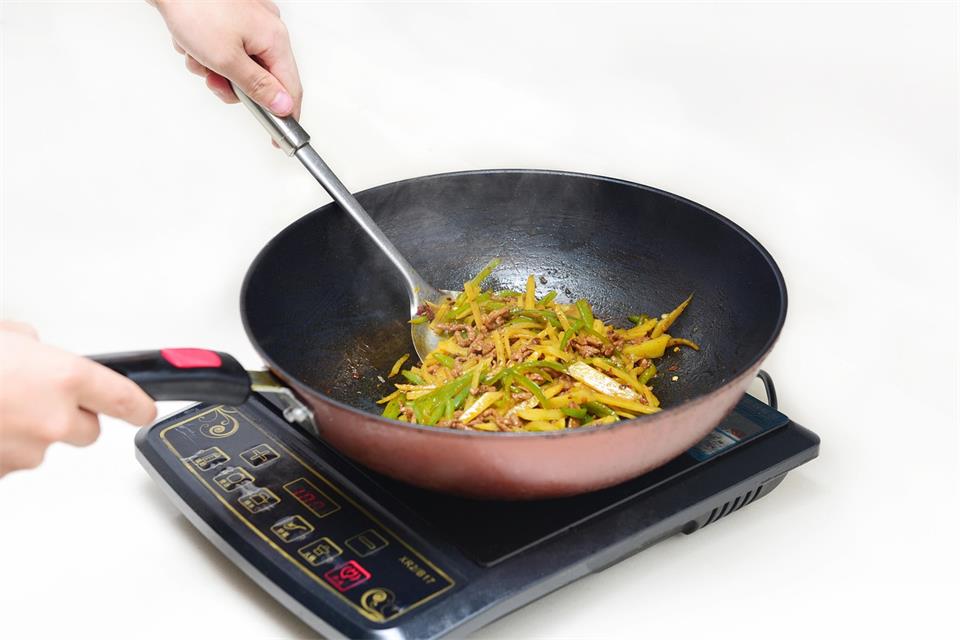
Not long ago, dragging a cast-iron skillet across a stove was a normal thing to do. The old coil burners and enameled steel tops shrugged it off. Now the surface under your pan is a smooth slab of what looks like black glass, and the same drag move feels like something you shouldn’t be doing, even though it’s fine.
That shift, from a forgiving metal top to something that looks fragile but isn’t, is worth understanding. It changes how you should shop for a cooktop, how you cook on one, and what you do the first time you hear a worrying scrape.
The surface isn’t glass in the way a drinking glass is glass. It’s glass-ceramic, and it behaves differently in every scenario.
A Cold Pan Meets a Hot Zone
Slide a cold, wet pan onto a burner still radiating heat from the last dish and you’ve done something that would crack ordinary glass in seconds. Soda-lime glass expands when it heats, and the outside heats faster than the inside, so it tears itself apart from the thermal gradient.
A glass-ceramic cooktop barely notices. The material is engineered with a coefficient of thermal expansion so close to zero that heating one spot to red-hot while the rest stays cool doesn’t build the internal stress needed to crack it.
That property is why induction and radiant cooktops can use a single flat sheet at all. According to SCHOTT, the lithium aluminosilicate glass-ceramics used in cooktops can handle sustained temperatures up to 950°C without the expansion that would fracture normal glass.
The pan gets hot. The zone right under it gets hot. The rest of the panel stays close to room temperature.
Nothing about that combination should work, but it does.
The Scrape You Didn’t Mean to Make
Push a heavy pot sideways and you’ll hear it. The sound is usually worse than the damage. Glass-ceramic is harder than most people assume, closer to the hardness of a good knife than to a wine glass. That’s why manufacturers can promise a decade of daily use without visible wear on the surface.
Hard isn’t the same as unscratchable, though. A few things reliably leave marks:
- Grit under the pan. A grain of salt or sugar between the pan and the surface acts like sandpaper the moment you slide. Wipe the underside of the pan and the burner zone before you cook.
- Aluminum pan bottoms. Softer metals can leave gray streaks that look like scratches but aren’t. A dab of ceramic-top cleaner takes them off.
- Sugar spills. Melted sugar bonds to the surface as it cools. Scrape it off while the zone is still warm, using a razor scraper at a shallow angle, not after everything has hardened overnight.
The Boil-Over Would Have Wrecked a Different Stove
A pot of pasta water rolling over onto a gas burner means fishing food out of the grates and hoping the igniter still works. On a coil stove, it means burnt-on residue you’ll be chipping at for a week. On a glass-ceramic induction top, it means a wet paper towel.
This is partly the surface, and partly the way induction heats. The cooktop itself doesn’t get hot the way a gas flame or an electric coil does. The pan does.
The Department of Energy points out that induction transfers energy directly into ferromagnetic cookware through an electromagnetic field, which is why the glass around the pan stays cool enough to touch shortly after you lift the pan off. Spilled sauce hits a warm surface, not a searing one, and never gets the chance to carbonize into the ceramic.
A Dropped Pan From Cabinet Height Is the Real Risk
This one is the honest weakness. Thermal shock, scratches, boil-overs, heavy pots sliding around, all fine. A cast-iron pan dropped edge-first from above is the failure mode manufacturers actually worry about.
Glass-ceramic resists thermal stress beautifully and mechanical point-impact less well. The material is strong under a distributed load and vulnerable to a concentrated one.
Two habits keep this from becoming your problem. Lift, don’t slide, anything heavier than a small saucepan when you can. And don’t store cast iron in a cabinet directly above the cooktop. Gravity has opinions about that arrangement, and the ceramic doesn’t get a vote.
The Process Is What Makes Any of This Possible
None of these properties come from the raw ingredients alone. A lithium aluminosilicate powder, before it’s processed, is chemically the right stuff and mechanically nothing special. What turns it into the material sitting under your pan is a controlled high-temperature step where the particles densify, bond, and lose their porosity in a way that’s tuned to the final application.
This is the sintering step, and small differences in how it’s run show up as big differences in how the finished panel behaves under a hot pan.
That’s the part that gets skipped in the marketing. The surface is tough because someone spent a long time getting the process right, not because ceramic is inherently tough. Worth remembering the next time you slide a pan across it and nothing bad happens.

For more than a month, the World Cup gave football supporters one competition to follow. The teams changed from day to day, but the path was easy to understand. Group matches led into the knockout rounds, the field became smaller, and every result carried a little more weight than the one before it.
Once the final whistle was blown, that focus began to break apart. Club football was already waiting, bringing transfer stories, new managers and familiar rivalries back into view. For anyone following the betway sports betting platform, the shift means moving away from one tournament and into a much broader list of leagues, fixtures and betting markets. The sport stays the same, but the way people read it changes almost immediately.
National Form Does Not Always Follow Players Home
The World Cup encourages supporters to think in terms of national teams. A player may look excellent in one system, surrounded by teammates who suit his game, and then return to a club where his role is completely different.
That is one reason the opening weeks of the Premier League can be difficult to judge. A strong summer does not guarantee an equally strong start to the domestic season. Some players return full of confidence, while others have barely had time to rest before being asked to settle back into weekly club football.
Team news becomes important very quickly. Managers may protect players who went deep into the tournament, give new signings an early chance or change their formation after seeing what worked during preseason.
The Betting Questions Become More Detailed
World Cup betting often centres on a smaller group of obvious questions: who will qualify, which side will win the match, and whether a knockout game will be decided inside 90 minutes all sit naturally around the tournament.
The Premier League spreads attention much wider across sports betting markets. There are ten matches across a normal weekend, along with player markets, goals, corners, cards and live betting to follow. One match may involve a title contender, another a promoted club, while a third is shaped by a rivalry that rarely follows recent form.
Familiar Clubs, New Questions
The return of club football feels comfortable because the names, grounds and rivalries are familiar. Yet the first few weekends rarely offer the certainty that familiarity suggests.
Users may recognise every team on the fixture list, but that does not mean those teams are exactly the same as they were in May. Coaching changes and returning internationals can alter the picture before the league has found its normal shape.
The World Cup asks fans to concentrate on one short, intense tournament. The Premier League asks them to settle in for a much longer story. Betting attention does not disappear when international football ends. It simply turns back toward the weekly details that make club football harder to predict and, for many supporters, just as interesting to follow.

An accident can change your daily routine almost overnight. One minute you’re carrying groceries, driving to work, walking the dog, doing all the boring little things nobody thinks twice about. Then suddenly even getting out of bed feels like a project that requires strategy, patience, and maybe a deep sigh or two.
It’s frustrating. Sometimes really frustrating.
People often focus on the injury itself, but honestly, the emotional side of recovery can hit just as hard. Losing independence for a while messes with your head. Even small tasks can start feeling weirdly overwhelming.
That’s why learning how to manage everyday life after an injury matters so much.
Stop Expecting Yourself to Function Normally Right Away
This sounds simple, but a lot of injured people struggle with it.
They keep trying to operate at 100 percent while their body is clearly waving a giant “please slow down” sign. Maybe you’re used to being productive all the time. Maybe you hate asking for help. A lot of people do.
Still, healing usually takes longer when you push too hard too soon.
Give yourself permission to scale things back temporarily. Laundry can wait an extra day. Dishes don’t need to sparkle like a commercial kitchen. Your body is already working overtime behind the scenes trying to recover.
Build Small Routines Instead of Big Goals
After an injury, huge goals can feel exhausting before breakfast. Small routines work better.
Focus on manageable habits that create structure without draining your energy. Wake up around the same time. Eat actual meals instead of random crackers from the pantry. Take short walks if your doctor approves. Keep medications and appointments organized in one place because pain fog is very real sometimes.
Honestly, tiny routines create a sense of control when everything else feels chaotic. And don’t underestimate how much mental relief comes from checking off small tasks.
Make Your Space Easier to Navigate
You notice awkward parts of your home very quickly after getting injured.
Suddenly stairs feel steeper. Showers feel slippery. Reaching for things on high shelves becomes annoyingly complicated. One woman I knew moved her coffee mugs to waist level after shoulder surgery because lifting her arm every morning nearly made her cry. Little adjustments matter.
Try rearranging frequently used items so they’re easier to access. Use supportive pillows. Keep chargers, medications, snacks, and water nearby. It sounds minor, but reducing unnecessary movement can conserve energy throughout the day.
The Centers for Disease Control and Prevention also offers practical injury recovery and fall-prevention information that can help make home environments safer during rehabilitation.
Let People Help Without Feeling Guilty
This one’s hard for independent people.
Friends or family may offer rides, meals, childcare, or help cleaning your house, and your instinct might be to refuse because you don’t want to feel like a burden. Totally understandable. But accepting help temporarily doesn’t make you weak.
It makes you human.
Most people genuinely want to support someone they care about. Besides, you’d probably help them too if the situation were reversed. You don’t have to carry everything alone just to prove a point to yourself.
Pay Attention to Your Mental Health Too
Recovery gets lonely sometimes. Pain changes moods. Limited mobility affects confidence. Financial stress piles on quickly if work gets interrupted. Even outgoing people can start feeling isolated after weeks of appointments and restricted activity.
Talk to somebody if those feelings start getting heavy. That could mean a trusted friend, therapist, support group, or doctor. Emotional recovery deserves attention too, even though people often treat it like an afterthought.
And honestly, healing tends to go more smoothly when your stress levels aren’t constantly through the roof.
The Practical Stuff Can Get Complicated
Medical bills, insurance paperwork, missed workdays, vehicle repairs. Accidents create a mountain of practical problems while you’re already exhausted.
That’s partly why some injured individuals eventually speak with personal injury lawyers in South Carolina when accidents involve negligence or serious financial consequences. Understanding your options can sometimes reduce uncertainty during an already stressful period.
Still, day-to-day recovery matters just as much as the legal side.
Healing rarely happens in a straight line. Some days feel productive. Other days you’ll wonder why putting on socks suddenly requires Olympic-level effort. That’s normal too. The important thing is giving yourself time, support, and enough patience to move forward one day at a time without expecting perfection from yourself every hour of the day.

How Operating Room Data Recorders Are Now Tackling Medical Malpractice Fights

The Message You Sent at 11 p.m. May Show Up in Court: Co-Parenting Apps vs. Everyday Texts as Evidence

The Number vs. The Story: How Coefficient of Friction Is Reshaping Slip-and-Fall Cases

How ICX Global Works From Sign-Up to Market Access

The Quiet Piece of Materials Science Sitting Under Your Induction Pan

Reporting Inside vs. Going to the Government: What Whistleblowers Get Wrong About Their Options

The Gun Isn’t the Case: What Actually Wins or Loses a New Jersey Weapons Charge
-
 Captions5 years ago
341 Sexy Captions to Fire Up Your Instagram Pictures
-
Captions5 years ago
311 Night Out Captions for Instagram and Your Crazy Night
-
Captions5 years ago
245 Saree Captions for Instagram to Boost Your Selfies in Saree
-
Captions5 years ago
256 Best Ethnic Wear Captions for Instagram on Traditional Dress
-
Captions5 years ago
275 Deep Captions for Instagram to Express Your Thoughts
-
Captions5 years ago
230 Blurred Picture Captions for Instagram
-
Quotes5 years ago
222 Nail Captions for Instagram to Showcase Your Fresh Manicure
-
Captions5 years ago
211 Laughing Captions for Instagram | Laughter Is the Best Medicine